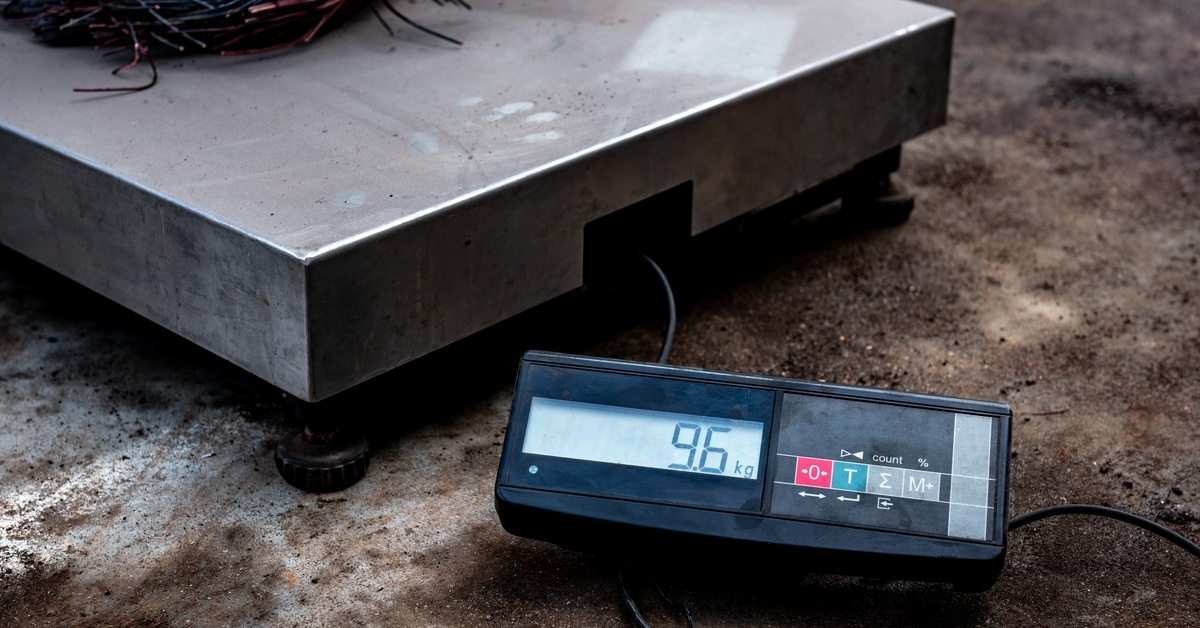
Industrial operations rely on accurate weighing every day. Inventory control, shipping, and production planning all depend on reliable weight data. Small errors create delays, increase costs, and strain equipment as volume grows.
This guide explains how to choose the right industrial floor scale by narrowing focus from overall operations to specific buying decisions. Capacity, platform size, accuracy, environment, installation, and service need shape performance over time. Matching the scale to real workloads helps teams avoid downtime and protect long-term accuracy.
Define Your Weighing Capacity Requirements
Start by identifying the heaviest load your scale will handle each day, including pallets, containers, dunnage, and any attachments or packaging that add extra weight. For example, a pallet that weighs 2,200 lb by itself could exceed 2,500 lb once stretch wrap, corner boards, and a pallet jack are included.
Always plan for peak loads rather than averages. Adding a safety margin—commonly around 25%—helps protect load cells and maintain accuracy across the full range. Selecting a scale that comfortably handles your heaviest expected loads reduces the risk of overload, prevents premature wear, and limits costly maintenance or downtime.
Match Platform Size to Load Dimensions
Platform size is just as important as weight capacity when choosing an industrial floor scale. A deck that’s too small forces pallets, bins, or carts to overhang, creating uneven weight distribution that can produce inaccurate readings and put extra stress on load cells.
Over time, uneven weight distribution can lead to more frequent maintenance, damaged equipment, and costly downtime. Measuring the footprint of the materials you regularly handle ensures the scale can fully support every load and maintain reliable performance.
In addition to properly supporting every load, larger, properly sized platforms help improve day-to-day workflow and safety. Standard 4×4 decks accommodate most pallets with room for placement and removal, while 5×5 or 5×7 platforms handle longer or irregular loads without overhanging.
Why It Matters
A scale that matches your load dimensions reduces the need for reweighing, speeds up transactions, and minimizes the risk of accidents from unstable loads.
Understand Accuracy and Readability Needs

Another tip for choosing the right industrial floor scale is to understand your accuracy and readability needs. Accuracy requirements vary depending on the type of operation. Generally, shipping and receiving prioritize speed and repeatability, making 1-lb readability at 5,000 lb capacity sufficient; additionally, batching and formulation tasks benefit from tighter resolution to ensure precise measurements. Inventory control may require even finer increments for cycle counts, but still within a practical range for daily operations.
Moreover, readability refers to the smallest increment the scale’s indicator can display, such as 0.5 lb or 1 lb. Higher resolution improves precision but adds cost, as it requires more advanced components and careful calibration. Matching readability to your specific needs helps avoid unnecessary expenses; for instance, if shipping charges are calculated by the pound, 1-lb increments usually provide adequate accuracy without inflating the budget.
Evaluate Environmental Conditions
The operating environment directly affects floor scale accuracy and lifespan. Moisture, washdowns, dust, and chemicals stress seals, connectors, and cabling. Generally, food and pharmaceutical facilities require corrosion-resistant, hygienic designs, while recycling and metalworking areas require abrasion- and impact-resistant construction.
Temperature changes and vibrations can affect scale accuracy, while nearby conveyors, presses, or mixers introduce mechanical noise that lower-quality scales may struggle to filter. You can maintain reliable readings in these conditions by choosing scales with strong sealing against dust and water, routing cables away from traffic, and selecting rugged construction that matches the actual operating environment.
Choose the Right Deck Material
The material of a floor scale’s deck directly impacts its durability, maintenance needs, and suitability for your operating environment. Carbon steel decks provide strength and value in dry warehouses, general manufacturing, and packaging areas. When finished with a proper powder coat or epoxy, they resist abrasion and minor corrosion, helping the scale maintain accuracy over time in less demanding conditions.
Stainless steel decks are the preferred choice for environments with frequent washdowns, exposure to caustic cleaners, or corrosive atmospheres. Choosing the right deck material ensures your scale withstands its environment, maintains reliable readings, and minimizes downtime for repairs or refinishing.
Confirm Load Cell Type and Protection
Load cells perform the actual measurement, making their quality a major factor when choosing an industrial floor scale. Many models rely on shear beam load cells because they perform well under heavy, evenly distributed loads. In environments with moisture or chemicals, hermetically sealed stainless steel load cells provide better protection than bare alloy steel options, especially in washdown areas.
Protection against overload and shock is also critical to long-term reliability. Forklift traffic and hard pallet placement introduce impact forces that lower-quality cells struggle to absorb. Look for scales with mechanical stops, robust mounting hardware, and protected junction boxes, since these features help reduce downtime and extend calibration intervals.
Select the Right Indicator and Connectivity Features
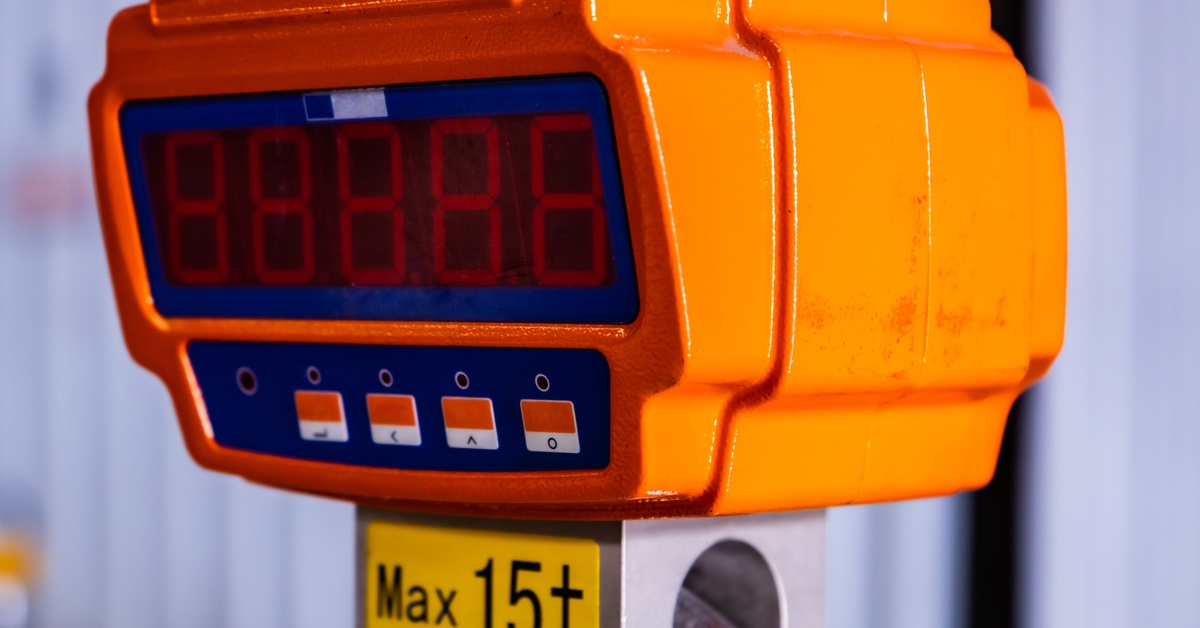
The weight indicator is the primary interface for your weighing system. While basic units provide essential functions like gross, net, tare, and simple counting, advanced programmable terminals offer deeper functionality. These models can store specific IDs, run transaction totals, and export data directly to your software for comprehensive traceability and reporting.
To ensure your scale integrates seamlessly with your existing infrastructure, consider your data and connectivity requirements:
- Integration: Determine if you need data exported to a Warehouse Management System (WMS) or ERP.
- Connectivity: Look for modern communication options such as USB, RS-232, Ethernet, Wi-Fi, or Bluetooth.
- Input/Output: Assess the need for barcode scanning support, programmable SKU IDs, or remote displays for high-traffic loading docks.
Plan for Installation and Floor Layout
Placement influences throughput and safety. Floor-mounted scales work well when operators load from multiple directions. In contrast, pit-mounted scales create a level surface that eases traffic flow with pallet jacks and carts.
Map traffic patterns and loading directions before installation to support smooth material flow. To support this layout, use ramps, bumpers, and guide rails to protect the deck and help operators align pallets quickly and consistently. Keep scales away from dock plate impacts and heavy vibration, and leave adequate clearance for service access so technicians can reach junction boxes and cables without delays.
Pro Tip
Facilities with narrow aisles often pick pit-mounted designs to keep pathways clear.
Review Calibration, Service, and Compliance
Calibration protects accuracy and keeps records in line with quality systems. Schedule verification based on usage, environment, and internal standards, and keep logs for audits. Choose equipment with readily available parts and local service support to shorten repair cycles when a component fails.
Operations that sell by weight need legal-for-trade approval. In the United States, that means National Type Evaluation Program (NTEP) certification on the scale and indicator as a system. NTEP labeling and documentation support compliance with local weights-and-measures rules and reduce the risk of fines or rejected transactions.
Shop for Scales
Choosing the right industrial floor scale ensures accurate weighing, protects equipment, and keeps operations running efficiently. Selecting the proper capacity and platform size, along with considering environmental conditions and load cell quality, ensures every decision supports performance and reliability.
USA Measurements offers a wide range of options and support to meet diverse industrial needs. Trust our experience to help your team maintain precision, safety, and productivity every day.
Related scales: non-NTEP floor scales, pallet jack scales and drum scales.